

Pediatric dental IV sedation is the core of what we do at Pediatric Sedation Center of Georgia. At our Stonecrest office, two doctors share every sedation visit. Dr. Todd Asarch, DDS, a pediatric dentist, does the dental treatment. A physician anesthesiologist manages your child's sedation from start to finish. Each doctor has one job to focus on.
Some children who come to us are too frightened to open their mouth. Others have decay in so many teeth that fixing it chairside could take visit after visit. Toddlers and children with autism or sensory needs may not be able to hold still through a long dental visit. Our pediatric dental sedation services page lists everything we offer, including hospital sedation.

IV stands for intravenous. A thin IV line is placed, usually in the hand or arm, and sedative medicine goes through it into the bloodstream. The IV is the delivery route. It lets the anesthesiologist give small amounts, see how your child responds and adjust during the dental procedure.
A sedative can also be swallowed. The ASA notes that minimal sedation is typically reached with one dose by mouth, given before the procedure starts. The AAP and AAPD say sedating medicine should only be given with medical or dental supervision. A single dose by mouth can't be adjusted step by step the way IV medicine can.
How deep the sedation goes is a separate question from how the medicine is given. Depth is judged by how a child responds and how well they breathe on their own, not by whether they seem asleep. The American Society of Anesthesiologists describes sedation as a continuum. It runs from minimal sedation through moderate and deep sedation to general anesthesia. The ASA notes that a patient's level can change during a procedure. No one can always predict how a person will respond. So whoever gives the sedation must be able to rescue a child who drifts deeper than planned. At our office, that person is a physician anesthesiologist.
Families often hear several terms at once. The ASA definitions and the American Academy of Pediatrics parent guide, Anesthesia or Sedation for Your Child's Dental Work?, explain how they fit together.
Nitrous oxide, also known as laughing gas, is a mild sedative a child breathes in. The AAP guide says children usually stay awake but get more relaxed. Oral sedation means the sedative is swallowed. How deep it goes depends on the medicine and the dose. Some dental offices use these options for lighter sedation. We do not provide nitrous oxide or oral sedation. Our pediatric sedation center focuses on IV sedation and general anesthesia for children who need more than a lighter approach can give.
Under moderate sedation, a child is drowsy but can still respond on purpose to a voice or a light touch, and breathes without help. Under deep sedation, a child can't be woken easily and may respond only to repeated or painful stimulation. The ASA notes that a deeply sedated patient may need help keeping the airway open, and breathing may not be enough on its own. The AAP guide describes deep sedation as IV medicine that helps a child sleep through the procedure. Some children still move a little or make sounds. Both levels are typically reached by giving IV medicines in small, adjusted steps during treatment.
Under general anesthesia, a child cannot be woken, even by painful stimulation. The ASA notes that patients often need help with their airway and may need breathing support. According to the AAP guide, general anesthesia for dental treatment can be given in a specially equipped dental office, an ambulatory surgery center or a hospital.
The safest type of sedation for children is not the same for every child. It depends on your child's health, the amount of dental work needed, and who is giving and monitoring the medicine.
IV sedation is not the first tool for every child or every cavity. It becomes part of the conversation when treatment in a regular dental chair isn't working or isn't realistic. Common reasons include:
None of these reasons means a child automatically needs sedation. Before recommending it, our pediatric dentist and anesthesiologist look at your child's age, behavior, medical history and dental needs. The joint AAP and American Academy of Pediatric Dentistry guidelines also call for an airway exam and a check for health problems that could make sedation riskier. Sometimes that review points away from office sedation. A child with more complex medical needs may do better with sedation in a hospital setting, which we also offer.

Safety in IV sedation comes from how it is done. The AAP parent guide describes the goal of dental sedation and anesthesia as "the safest, most pain-free treatment." No sedation is free of risk. Careful preparation and close monitoring by trained people lower that risk. The joint AAP and AAPD Guidelines for Monitoring and Management of Pediatric Patients Before, During, and After Sedation, reaffirmed in June 2025, call for:
For deep sedation or general anesthesia, the AAP guide explains that at least two people trained in advanced life support must be in the room. One is the dentist. The other is an independent observer, such as a physician anesthesiologist. That person watches heart rate, heart rhythm, blood pressure and oxygen saturation (the level of oxygen in the blood) until the child wakes up. They can also decide when the child is ready to go home. At our center, that second person is one of our physician anesthesiologists. They stay focused on your child's airway, breathing and vital signs.
The most important risks involve the airway and breathing. Deeper sedation can weaken breathing or make it harder to keep the airway open. A child can also slip deeper than intended. The ASA points out that children have particular breathing risks, and that risk rises with major medical problems. It expects the provider to fix problems such as low oxygen or low blood pressure. The child must be brought back to the intended level before the procedure goes on.
Leaving decay untreated puts your child's oral health at risk too. It can cause dental pain and infection. The decision weighs both sets of risks.
Ask who will give the sedation and who will watch your child while the dentist works. It's fair to ask about that person's training, whether they are board-certified and what monitoring they use. You should also know where your child recovers and who decides when it's time to go home. You can read about our pediatric dentist and physician anesthesiologists before your visit.

We give you eating and drinking instructions for your child's appointment. Follow those exact instructions rather than a general rule you read online. If your child eats or drinks after the cutoff, tell us right away. Let us know if your child gets sick the week of the appointment or takes daily medication. That way we can check the symptoms and reserve another date if needed. If any instruction is unclear, call us at 470-395-2524.
Parents wait outside the treatment room during the procedure. Inside, Dr. Todd works through the planned dental treatment while the anesthesiologist keeps the sedation at the right depth and watches your child's vital signs. We aim to finish the full treatment plan in one visit, so the appointment can run longer than a routine dental visit. Whether that happens depends on your child's needs, how they respond and how long treatment can safely last. Sometimes the work has to be split into more than one visit.
Your child moves to recovery once treatment is done. The AAP and AAPD guidelines call for children to be as alert as they were before sedation before they go home. The anesthesiologist assesses when your child is ready. Children wake at different speeds, so time in recovery varies from child to child. You go home with discharge instructions. Call our office with any questions about recovery. If you can't wake your child or their breathing seems abnormal, call 911.
The AAP guide notes that most children under moderate sedation will not remember anything about the procedure. Memory still varies, so plan for the chance that your child recalls parts of the day, such as arriving or waking up. A child may remember moments before the medicine takes effect or as it wears off. The ASA says that is different from being aware during general anesthesia. If your child remembers parts of the treatment itself, or a memory upsets them, tell our anesthesia team.
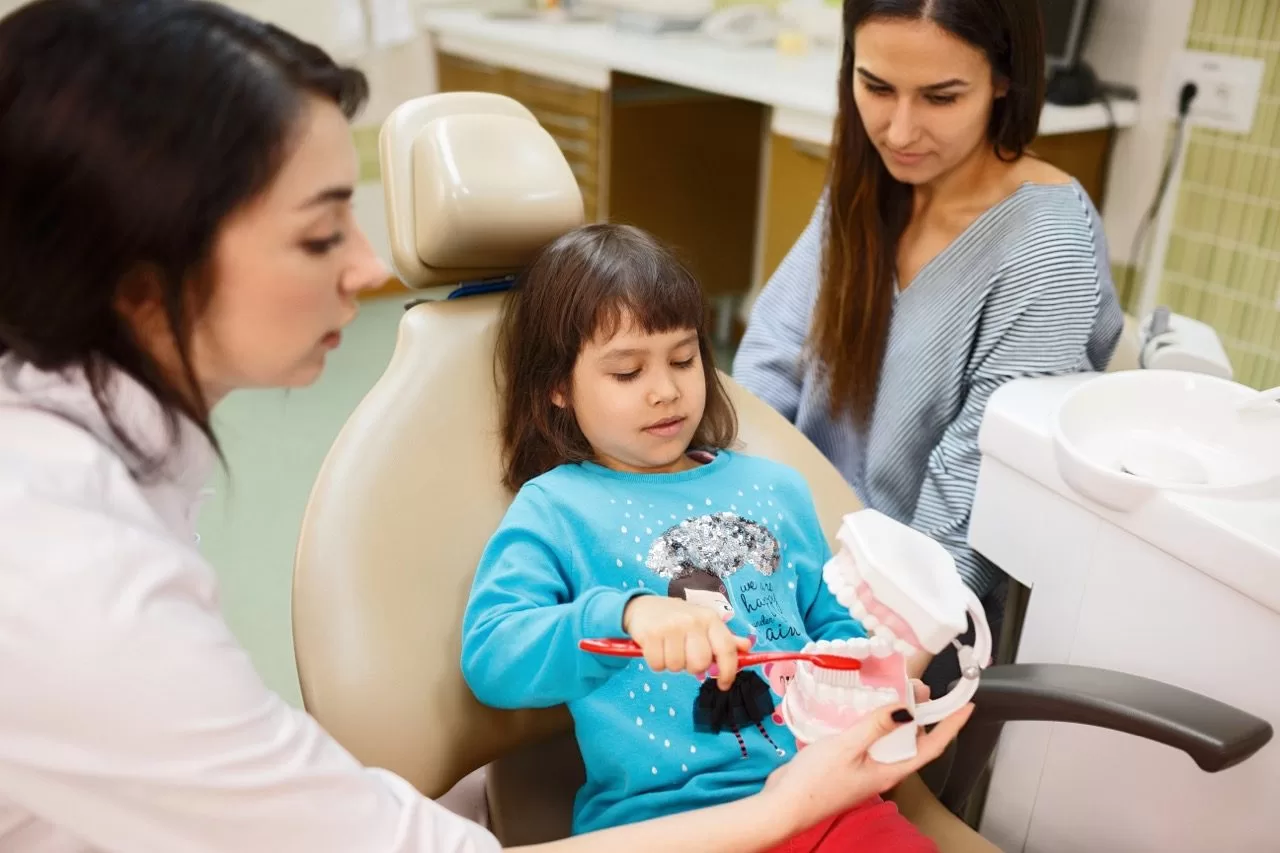
A key practical benefit is the chance to finish care in one visit. During a single sedation appointment, Dr. Todd can complete fillings, stainless steel or tooth-colored crowns, extractions, baby root canals, space maintainers and sealants. Without sedation, that work might be spread across many short visits. When it is all finished in one session, your child goes through one round of fasting and one recovery. Some children still need more care or another sedation visit later.
When a child is calm and still under sedation, the dentist can work carefully without stopping to soothe a frightened patient. Local anesthesia numbs the area being treated, which helps with pain. On its own, it doesn't calm a child or help them stay still. For some anxious children and children with special needs, sedation can be how needed dental care for children finally gets done.
The tradeoffs are a longer appointment, a recovery period and the airway and breathing risks described above, which can be serious. How much risk your child faces depends on their health and how deep the sedation goes. Families and their dentists weigh that against the risks of delaying care or splitting it up. Those depend on how urgent the dental problem is and what else has been tried.

IV describes how the medicine enters the body. Moderate sedation, deep sedation and general anesthesia are levels of depth, measured by how a child responds and breathes. The ASA describes both moderate and deep sedation as typically reached with IV medicines. So a child can receive IV medicine at more than one depth. Deep sedation and general anesthesia differ in depth. That includes how much help with the airway and breathing a child is likely to need. The useful question for your child is how deep the sedation needs to go and who is trained to manage it.
Our anesthesiologist recommends a level based on your child's health, age and treatment plan. For some children with major medical conditions, a hospital may be a safer setting than an office. We offer hospital dental sedation for those cases.
Call 470-395-2524 to set up a consultation. We'll review your child's dental needs and health history and talk through whether IV sedation fits. Our office is open Monday through Friday, 6:30 a.m. to 4:00 p.m. We work with Georgia Medicaid plans and most PPO plans. Ask us to check your child's coverage when you call, since benefits depend on the plan.
Pediatric Sedation Center of Georgia
8180 Mall Parkway, Suite 810
Stonecrest, GA 30038
Our contact page lists our address and office hours. Dentists referring a child can use our Refer a Patient form.


