

Your child has special needs, and the dentist just told you they can't complete the dental care your child requires in a traditional dental office. Your child might have autism and the sounds of dental tools cause a meltdown. They might have a sensory processing disorder and can't tolerate anyone touching their mouth. Or developmental disabilities that make it impossible to sit still or follow instructions during a dental procedure.
Pediatric dental sedation can make care possible. At Pediatric Sedation Center of Georgia, we provide specialized dental care for children with special needs who cannot receive treatment in a regular dental office. A board-certified anesthesiologist monitors every child throughout the procedure, and our pediatric dentist completes all necessary treatment while your child sleeps.
Special needs dentistry is dental care designed for patients with physical, developmental, cognitive, sensory, or behavioral conditions that make routine dental visits difficult or impossible. The American Academy of Pediatric Dentistry defines these patients as anyone with a physical, developmental, mental, sensory, behavioral, cognitive, or emotional condition that requires modified dental care delivery.
For children, this often means the standard approach at a pediatric dentist's office doesn't work. The bright lights, loud suction, unfamiliar dental tools, and extended time in the dental chair overwhelm children who already struggle with sensory input or anxiety. Some children with special needs simply cannot cooperate with dental treatment, no matter how patient the dentist and staff are.
Sedation lets our pediatric dentist complete all dental care in a single visit while your child sleeps through the procedure.
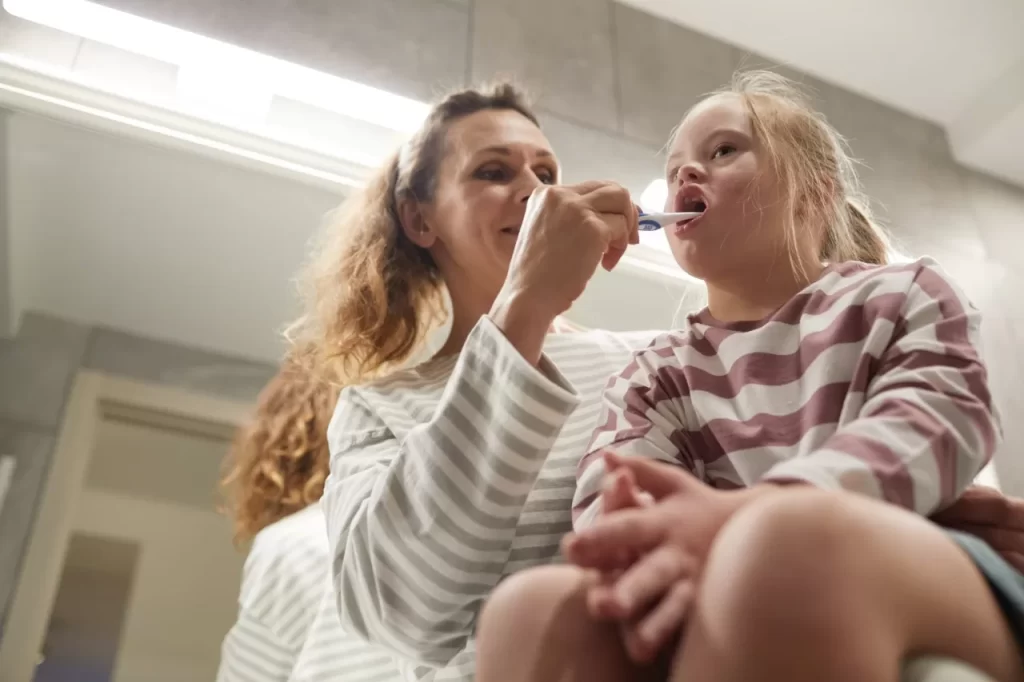
Pediatric Sedation Center of Georgia provides dental sedation for children with a wide range of special health care needs:
Autism spectrum disorder. Children with autism often experience sensory overload in the dental office. The combination of unfamiliar people, clinical smells, bright overhead lights, and dental tools in their mouth can trigger severe anxiety or behavioral responses. Many autistic children cannot tolerate even routine dental cleanings without sedation. IV sedation helps children with autism receive the dental care they need without the distress that a traditional dental visit causes.
Sensory processing disorders. Children who are hypersensitive to touch, taste, sound, or texture find the dental experience overwhelming. The vibration of dental tools, the taste of dental materials, and the sensation of hands in their mouth can be unbearable. Sedation removes these sensory barriers entirely.
Developmental disabilities. Children with intellectual or developmental disabilities may not understand what's happening during a dental procedure or why they need to hold still. This isn't a behavior problem — it's a developmental reality. Sedation ensures your child receives dental treatment safely without requiring cooperation they cannot provide.
Cerebral palsy and motor disorders. Involuntary movements make dental procedures unsafe without sedation. When a child cannot control their muscle movements, the pediatric dentist needs the child completely still to work accurately. Sedation provides that stillness and keeps your child comfortable.
ADHD and attention disorders. Extended dental appointments require patience that many children with ADHD simply don't have. While some children with ADHD do fine with behavioral techniques and nitrous oxide at a regular pediatric dental office, those who need extensive dental work often benefit from deeper sedation.
Severe anxiety disorders. Some children with special needs have compounding anxiety that goes beyond typical dental fear. When anxiety prevents every attempt at dental care — even basic exams — sedation becomes the path to dental treatment that would otherwise never happen.
Sedation makes dental care possible for children who couldn't receive it any other way.
No sensory distress during dental treatment. Your child sleeps through the dental procedure. No awareness of sounds, textures, lights, or dental tools. For children with sensory sensitivities, this is the difference between dental care happening and dental care not happening.
Complete dental treatment in one visit. Instead of spreading dental work across multiple appointments — each one potentially traumatic — sedation allows our pediatric dentist to address everything at once. Fillings, crowns, extractions, and other dental procedures all completed while your child is comfortable.
No traumatic dental memories. Children under sedation have no memory of the dental procedure afterward. This matters for every child, but it matters especially for children with special needs who may struggle to process difficult dental experiences. A dental visit your child can't remember is a dental visit that won't cause future fear.
Safer dental care for your child. A child who moves unexpectedly during dental work risks injury. Sedation keeps your child completely still, allowing our pediatric dental team to work precisely. For children with motor disorders or those who might bite or jerk away from dental tools, sedation is a safety measure.
The right sedation option depends on your child's specific needs, medical history, and the dental treatment required.
Nitrous oxide (laughing gas) provides minimal sedation. Your child breathes through a mask over their nose, feels calmer, and stays awake. Many pediatric dentists offer nitrous oxide as a first-line option. It works for children with mild anxiety during simple dental procedures, but most children with significant special needs require deeper sedation than nitrous oxide provides.
Oral sedation uses sedation medication given by mouth. It produces moderate sedation — your child becomes drowsy and relaxed but may still be partially aware. Oral conscious sedation is less predictable, and for children with special needs who have difficulty swallowing medication or whose sensory issues make oral sedation unreliable, it may not be the best option.
IV sedation delivers medication directly into the bloodstream. This is what we use most often at our sedation center. The anesthesiologist has precise control over sedation depth throughout the dental procedure — they can adjust in real time based on how your child responds. Children fall asleep quickly and typically wake with no memory of their dental appointment.
General anesthesia produces complete unconsciousness. It's used for extensive dental work, children with complex medical histories, or when the dental procedure requires the deepest level of sedation. Some children with special needs may need general anesthesia rather than IV sedation depending on their medical conditions. Our anesthesiologist evaluates each child individually.
At Pediatric Sedation Center of Georgia, we specialize in IV sedation and general anesthesia — the two options that give our dental team and anesthesiologist the most control over your child's comfort and safety. Nitrous oxide and oral sedation are services offered by general pediatric dentists.
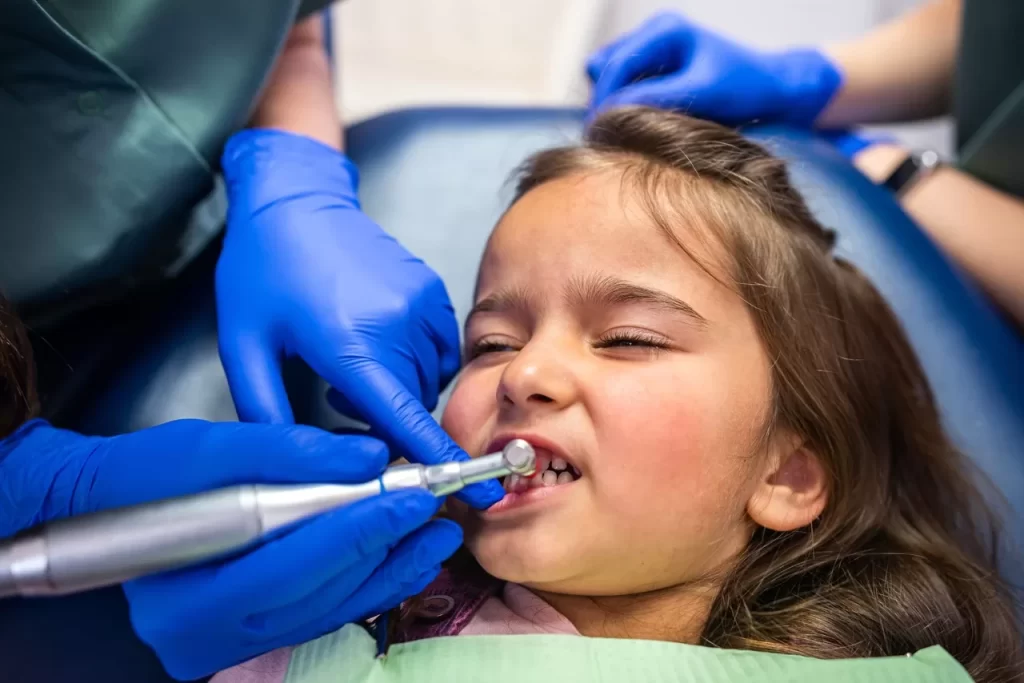
Pediatric dental sedation is safe when administered by qualified professionals with proper monitoring. Children with special needs may have additional considerations — certain medications, airway differences, or medical conditions that affect how their body responds to sedation. That's exactly why our process starts with a thorough evaluation.
Before any dental sedation, our anesthesiologist reviews your child's complete medical history, current medications, previous reactions to anesthesia, and any diagnoses that could affect sedation. If your child has a condition that makes office-based sedation higher risk, we'll recommend a hospital setting where additional medical resources are immediately available.
Safety measures at our sedation center include:
The risks of not treating dental problems are real too. Untreated decay causes pain, infection, and damage to developing permanent teeth. For children with special needs who already face daily challenges, dental pain makes everything harder. Sedation is often the only path to dental care that protects your child's oral health and overall well-being.
We know that children with special needs may require additional preparation beyond our standard process. Our dental team works with you to ensure your child's dental appointment goes as smoothly as possible.
Before the dental appointment: We take time during your consultation to understand your child's specific triggers, communication style, and what helps them feel comfortable. Tell us everything — what calms your child, what overwhelms them, what words or approaches work best. This helps our dental team and anesthesiologist prepare for your child's unique needs.
Fasting and medication: Follow the same preparation instructions we give every family — nothing to eat or drink after 11pm the night before. If your child takes daily medication, let us know so the anesthesiologist can determine whether your child should take it the morning of the dental procedure. For children on seizure medications, behavioral medications, or other critical prescriptions, this conversation is essential.
Comfort items: Bring whatever helps your child feel safe — a favorite toy, blanket, or comfort object. Our pre-op area has TVs and a kid-friendly atmosphere, but your child's own familiar items can make the dental visit less stressful.
Two adults required: One to drive, one to monitor your child during the ride home. This is required for all families, but it's especially important for children with special needs who may have unpredictable reactions as sedation wears off.
For complete preparation details, see Preparing for Sedation.
Parents of children with special needs carry a weight that other parents may not fully understand. You've already navigated systems, advocated for your child in medical offices, and dealt with providers who didn't know how to work with your child. You may have had dental offices turn your child away or suggest restraining them for dental treatment.
We don't restrain children. Sedation allows necessary dental care without trauma.
Our pediatric dentist and dental team have years of experience working with children across the full spectrum of special health care needs. We understand that your child's dental experience matters as much as the dental outcome. Whether your child has autism, Down syndrome, cerebral palsy, or any other condition that makes traditional dental visits impossible, sedation dentistry gives them access to quality dental care without trauma.
Every child deserves dental care that meets them where they are. If your child has special needs and needs dental treatment, sedation may be the answer your family has been looking for.
Call us at 470-395-2524 to schedule a consultation. We'll discuss your child's needs, review their medical history, and help you understand whether sedation is the right choice for your child's dental care. Bring your questions — we'll answer every one.
For general information about our sedation services, visit Pediatric Dental Sedation. For answers to common questions about sedation dentistry, see Pediatric Sedation FAQs.
Pediatric Sedation Center of Georgia
8180 Mall Parkway, Suite 810
Stonecrest, GA 30038


