
Parents ask us this all the time at our Stonecrest office. The logic seems sound: since baby teeth will eventually fall out anyway, why spend money and effort keeping them healthy?
Because your child's baby teeth are important for many reasons that extend well beyond chewing. Your child will rely on their first set of teeth for most of childhood. The first baby teeth come in around six months of age, and the last baby molars don't fall out until age 11 or 12. That's over a decade of daily use. During those years, primary teeth do real work that directly affects your child's overall health, speech, and the permanent teeth forming underneath.
Children develop 20 baby teeth below their gums before birth. These primary teeth begin breaking through around six months, and by age three, most children have all 20 primary teeth in place. The American Academy of Pediatric Dentistry (AAPD) identifies several functions these teeth serve.
Chewing and nutrition. Baby teeth let children chew solid food properly. A child with decayed or missing teeth has trouble eating meat, raw vegetables, and other foods that growing bodies need. Poor chewing leads to poor nutrition during the years when diet matters most for brain and body development.
Speech development. Children learn to form sounds by pressing their tongue against their teeth. The "th," "s," "f," and "l" sounds all depend on front teeth and back teeth being in the right position. When a baby tooth is lost too early, children can develop speech patterns that require therapy to correct.
Holding space for permanent teeth to come in. This is the one most parents don't know about. Each baby tooth holds a specific spot in the jaw for the permanent tooth growing beneath it. When a baby tooth is lost too early, the neighboring teeth drift into the gap. When the adult teeth are ready to emerge, there's no room. That leads to crowding, crooked teeth, or permanent teeth trapped in the bone that may need surgical help.
Jaw growth. Baby teeth stimulate normal jaw development as your child chews. Without that stimulation, the jaw may not develop properly, creating alignment problems that require orthodontic treatment later.
Tooth decay is the most common chronic childhood disease in the United States, according to the CDC, affecting roughly 23% of children ages 2 to 5.
What makes decay in baby teeth worse is speed. Baby tooth enamel is thinner than permanent tooth enamel, so a cavity can reach the nerve in months rather than years. Once the nerve is involved, your child has a toothache that disrupts sleep, eating, school, and daily life.
Left untreated, a decayed baby tooth can abscess. The infection spreads from the tooth into surrounding bone and gum tissue. Dental abscesses in children cause pain and facial swelling, and sometimes require emergency care. The infection from a baby tooth can also damage the permanent tooth developing below it, disrupting enamel formation and leaving the adult tooth discolored or weakened before it even breaks through.
At Pediatric Sedation Center of Georgia, we see children every week whose untreated decay has reached this point. Multiple teeth need crowns, fillings, or extractions all at once. When a young child needs that much dental work, completing everything under pediatric dental sedation in one visit is often the safest option. That's not a scare tactic. It's what happens when baby tooth problems compound over months or years.
The timeline surprises most parents. Baby teeth don't all fall out at once, and losing baby teeth happens gradually over several years.
The lower front teeth are usually first to go, around age 6. But the back teeth, the baby molars, don't fall out until ages 10 to 12. Those molars handle most of your child's chewing for a full decade, and they hold the space for premolars and second molars that will eventually replace them.
When a baby tooth is lost at age 4 because of decay, that means six or more years with a gap. Without a space maintainer, the teeth around the gap shift, and the permanent tooth has nowhere to go. A pediatric dentist can place a space maintainer to prevent this, but the better outcome is keeping baby teeth healthy so they stay in place until the permanent teeth are ready.
Good oral health starts before your child's first teeth break through. The AAPD and the American Dental Association (ADA) both recommend wiping your infant's teeth and gums with a clean, damp cloth after feedings to clear bacteria.
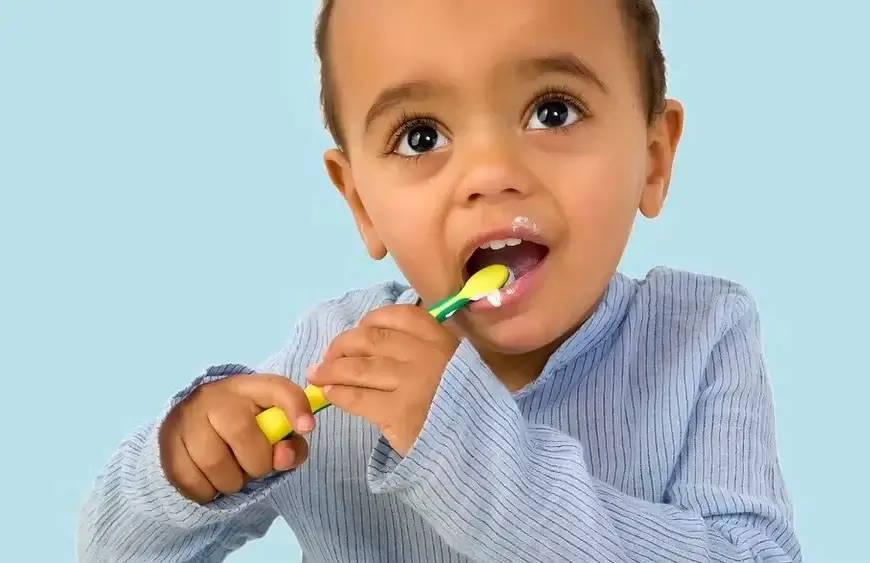
Once the first teeth appear, brush twice a day with a soft-bristled toothbrush and a rice-grain-sized smear of fluoride toothpaste. At age three, increase to a pea-sized amount. Teach your child to spit out the toothpaste rather than swallow it.
Start flossing when two teeth touch. The contact points between back teeth are where cavities in young children most often develop. Brush and floss daily to help prevent tooth decay before it starts.
Limit juice, soda, and sugary snacks between meals. The bacteria that cause decay feed on sugar and produce acid that eats through enamel. Water and milk between meals are better choices for your child's teeth.
Schedule your child's first dental visit by their first birthday, or within six months of the first tooth coming in. The ADA and AAPD both recommend this timeline. A pediatric dentist can catch problems early, apply protective fluoride varnish, and help your child build comfort with dental care while the stakes are low. Keeping baby teeth healthy from the start gives your child the best chance at healthy permanent teeth and a lifetime of good oral health.
Some children get cavities even when parents do everything right. Genetics, tooth anatomy, and the specific bacteria in a child's mouth all play a role. That's not a reflection of parenting.
When a child has multiple cavities, decay that has reached the nerve, or teeth that need crowns or extraction, getting the work done in a regular dental chair can be difficult. Young children and those with dental anxiety often can't sit still long enough for safe dental treatment. Spreading the work across many appointments means months of living with active decay and pain.
Pediatric dental sedation changes that equation. At our office in Stonecrest, Dr. Todd Asarch works with a board-certified anesthesiologist to complete a child's dental treatment in a single visit while they sleep. Fillings, crowns, pulpotomies, extractions, and space maintainers can all be handled at once, with one recovery.
Baby teeth matter. Taking care of them protects your child's oral health now and sets the stage for healthy teeth that last a lifetime. If your child's teeth need more care than your regular dentist can provide in the chair, sedation may be the right next step. Call us at 470-395-2524 or contact our office to schedule a consultation. We accept Georgia Medicaid plans and most PPO insurance.
