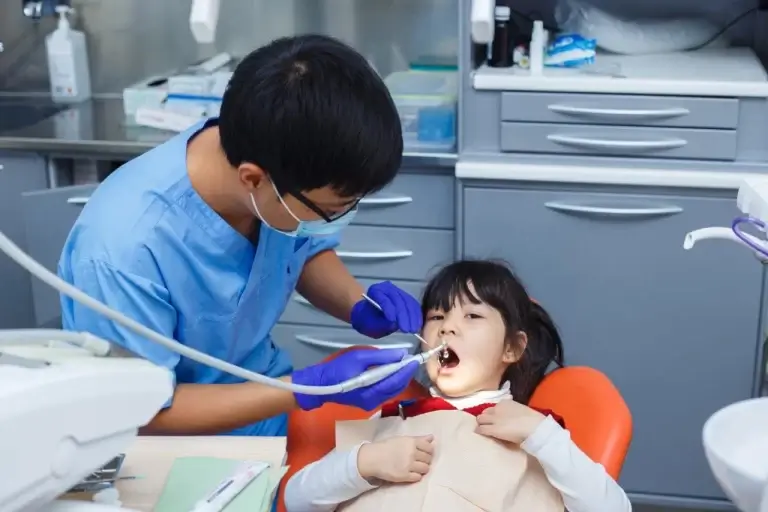
Space Maintainers After Tooth Extraction for Kids

Your child's dentist just said your kid needs a tooth pulled. Then they mentioned something called a space maintainer. You left the appointment with two pieces of news instead of one, and the second raised a lot of questions.
A space maintainer is a small dental device that holds the gap open after a baby tooth is lost too early. Without one, the teeth on either side of the empty space drift toward each other. That drift can block the permanent tooth from coming in where it should, and the fix for that problem is usually braces.
At Pediatric Sedation Center of Georgia, Dr. Todd Asarch places space maintainers during the same sedation visit as the extraction. Both the extraction and the space maintainer placement are completed in one appointment, under one round of sedation. For parents who came in expecting their child would need multiple dental visits, that changes everything.
Why a Lost Baby Tooth Creates Dental Problems
Baby teeth do more than chew food. They hold space in the jaw for the permanent teeth growing underneath. Each baby tooth is a placeholder, and the permanent tooth below it relies on that space being open when it's ready to erupt.
When a child loses a baby tooth on schedule (most kids start losing teeth around age six), the permanent tooth is usually close behind. The gap doesn't stay open long enough for the other teeth to move.
But when a baby tooth is lost early, whether from decay, injury, or extraction, the permanent tooth underneath may still be months or years away from erupting. The American Academy of Pediatric Dentistry (AAPD) identifies premature loss of primary teeth as one of the most common causes of space loss in the developing dental arch. Without something to preserve the space, the neighboring teeth tilt and drift into the gap. The permanent tooth below loses its path, and when it's finally ready to erupt, there's no room. Teeth come in crooked, stacked, or impacted.
What started as one extraction can turn into years of orthodontic treatment.
What Is a Space Maintainer?
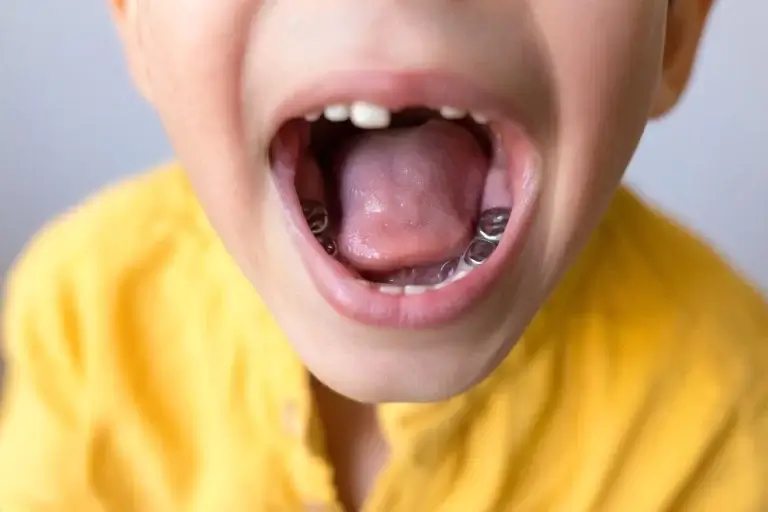
Space maintainers are small dental devices, usually made of stainless steel wire and sometimes a crown, placed in the gap after a baby tooth is lost prematurely. The appliance keeps the teeth on either side from drifting together, holding the space open until the permanent tooth is ready to emerge.
Space maintainers are not braces. They don't move teeth. They prevent movement. The appliance sits in the mouth, does its job quietly, and comes out when the permanent tooth starts pushing through the gum.
Think of it as holding a parking spot. The permanent tooth needs that spot, and the space maintainer keeps other teeth from taking it.
When Does a Child Need a Space Maintainer?
Not every lost baby tooth requires a space maintainer. If your child loses a front tooth (an incisor) early, the risk of space loss is lower because front teeth don't bear the same crowding pressure as back teeth. The AAPD clinical guidelines indicate that space maintainers are most often recommended when a child loses a primary molar before the permanent tooth is ready to erupt.
Your child may need a space maintainer when a back baby tooth (molar) is extracted due to decay or injury, when a baby tooth is knocked out before the permanent tooth is close to erupting, or when X-rays show the permanent replacement tooth is still far from the surface.
At our Stonecrest, Georgia practice, Dr. Asarch reviews dental X-rays before and after each extraction to check the position and development of the permanent tooth underneath. If that tooth is within about six months of erupting, a space maintainer may not be necessary. If the permanent tooth is a year or more away, the recommendation is almost always to place one.
The timing matters. Once teeth start shifting into the empty space, the window for a simple space maintainer closes. At that point, the child may need orthodontic treatment to reopen the space, which takes longer and costs more.
Types of Space Maintainers Available for Children
Space maintainers come in several designs. The type your child's dentist recommends depends on which tooth was lost, how many teeth are missing, and whether the child can care for a removable appliance.
Fixed Space Maintainers
Fixed space maintainers are cemented to the teeth next to the gap. They stay in the mouth full-time and don't require the child to remember to wear them.
Band and loop maintainers are the most common design for a single missing molar. A metal band wraps around the tooth next to the gap, with a wire loop extending across the empty space to hold it open.
Crown and loop maintainers work the same way, but use a stainless steel crown on the anchor tooth instead of a band. This design is often chosen when the anchor tooth also needed restoration, because the crown protects the damaged tooth and holds the space open at the same time.
When the second primary molar is lost before the first permanent molar (the six-year molar) has erupted, a distal shoe maintainer may be recommended. The appliance extends a small metal guide beneath the gum to direct the permanent molar into its proper position. This type requires more precise placement and closer follow-up.
For cases where multiple teeth are missing on the same arch, a lingual arch connects both sides of the lower jaw with a wire cemented to molars on each side.
Removable Space Maintainers
Removable space maintainers look similar to orthodontic retainers. They work well for older children who can keep track of the device and wear it every day. Younger children and children with special needs do better with fixed maintainers that stay in place without daily cooperation.
In our practice, Dr. Asarch most often places band-and-loop or crown-and-loop maintainers. These are reliable and well tolerated by young children who might struggle with a removable appliance.
What Happens If You Skip the Space Maintainer?
Parents ask this question a lot. Most of the time, when a back tooth is involved, space maintainers really are necessary.
When a baby tooth is lost early and no space maintainer is placed, the teeth next to the gap begin drifting within weeks. The tooth behind the gap tips forward. The tooth in front tips backward. Over months, the space closes partially or completely.
When the permanent tooth is finally ready to erupt, it doesn't have room. It may come in crooked, rotated, or partially impacted under the gum. In some cases, it can't erupt at all and stays trapped in the bone.
Orthodontic treatment to reopen the space is the fix at that point. That means braces, multiple visits over 12 to 24 months. For a child who already struggles with dental appointments (which is often the reason the tooth needed extraction in the first place), adding years of orthodontics is a hard path.
Space maintainers cost a fraction of what braces cost and take minutes to place. Skipping one is a gamble with poor odds.
That said, space maintainers are not always the right call. If the permanent tooth is close to erupting and visible on X-ray near the gum surface, the pediatric dentist may decide the risk of space loss is low enough to wait. This is a clinical judgment that depends on the specific tooth, the child's age, and the X-ray findings. Dr. Asarch makes this assessment individually for each child at our Stonecrest location.
How Sedation Makes Space Maintainer Placement Easier
Placing a space maintainer does not hurt. But it does require the child to sit still with their mouth open while the dentist fits and cements the appliance. For many kids, that's manageable. For the children who come to Pediatric Sedation Center of Georgia, it usually isn't.
Our patients are children with dental anxiety so severe they can't tolerate treatment in a regular dental chair. Some have sensory processing disorders or autism. Some are very young (two or three years old) and can't stay still long enough. Others have extensive decay affecting multiple teeth and need several procedures done at once.
For these children, IV sedation makes the difference between finishing the dental work and not finishing it. Under sedation, the child sleeps through the entire appointment. The dentist can extract the damaged tooth, take impressions or measurements, and place the space maintainer in a single visit. The child won't remember any of it, and the treatment gets finished without needing a return trip.
At PSC, the sedation is managed by a board-certified physician anesthesiologist (Dr. Shawn Campbell, Dr. Stan Plavin, or Dr. Ravi Grandhi) whose only job during the procedure is monitoring your child's breathing, heart rate, and oxygen levels. Dr. Asarch handles the dental work. That means two doctors are in the room, each focused on one job. This two-doctor model is different from offices where one provider tries to do the dental work and manage sedation at the same time.
The pediatric dental sedation page explains how this approach works. If you have questions about safety, see our page on whether pediatric dental sedation is safe.
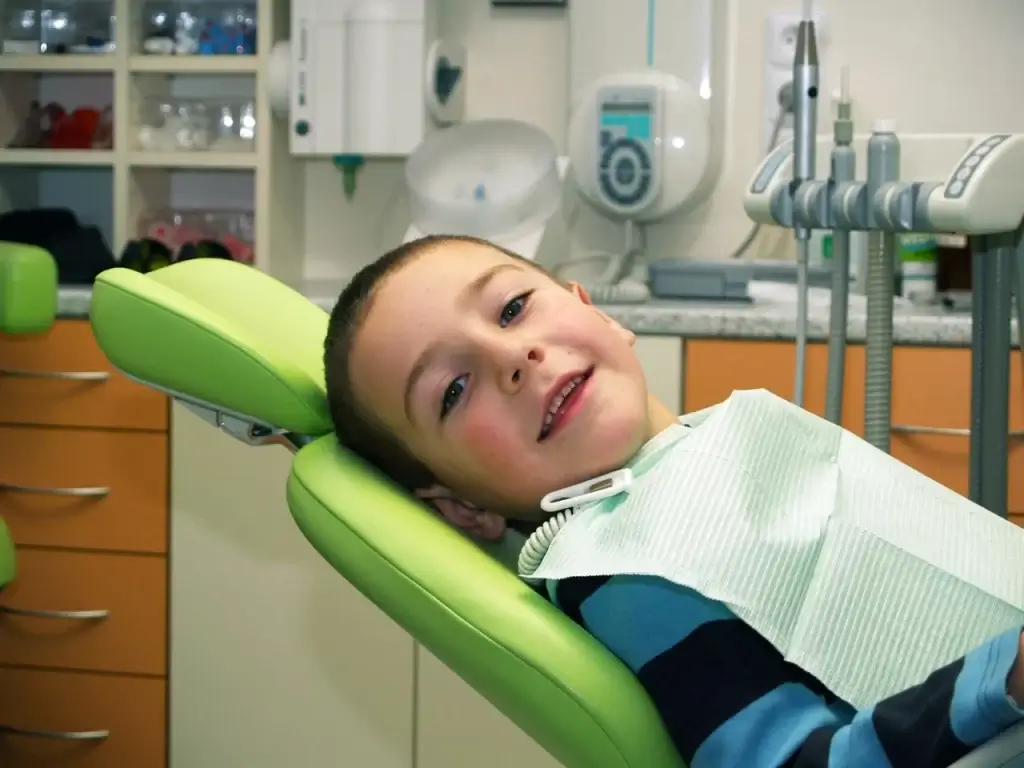
Extraction and Space Maintainer Placement in One Visit
One of the biggest advantages of sedation for children with multiple dental needs is consolidation. Instead of spreading treatment across four, five, or six stressful appointments, everything happens in a single visit.
Children who come to PSC for extractions often need other work too: fillings, crowns, sometimes a pulpotomy on a tooth that can be saved rather than pulled. When an extraction is part of the treatment plan, Dr. Asarch evaluates whether a space maintainer is needed and places it during the same appointment.
Families get one round of pre-sedation preparation (see how to prepare your child) and one recovery period (here's what to expect after sedation) instead of two or three.
This matters beyond convenience. Children who have traumatic dental experiences early in life often develop lasting dental anxiety. Every additional appointment is another opportunity for that anxiety to build. Finishing all the work in one visit under sedation reduces the total number of stressful events your child goes through. That's better for their oral health long-term, because children with dental anxiety are less likely to keep up with regular dental checkups and preventive care as they grow.
Caring for Your Child's Space Maintainer
Space maintainers don't need much maintenance, but they do need some attention.
Your child should avoid sticky foods like caramel, taffy, and chewing gum. These can pull the maintainer loose or bend the wire. Hard foods like popcorn kernels, ice, and hard candy can also damage the appliance.
Daily brushing and flossing around the space maintainer keeps the area clean. Food gets trapped around the wire and band, so parents of younger children should check the area at brushing time. Help your child brush their teeth around the maintainer until they can do it well on their own. Regular dental check-ups give the dentist a chance to monitor the appliance and check the progress of the permanent tooth underneath.
If the space maintainer feels loose or comes out, call your child's dentist. Don't try to re-cement it at home. Save the appliance and bring it to the office. In most cases, the dentist can re-attach it in a short visit.
One thing parents should know: some kids complain about the maintainer for the first few days. The tongue notices it and plays with it constantly. Most children stop noticing within a week. But if your child has persistent soreness at the gum line or difficulty eating after the first week, have the dentist check the fit. An appliance that doesn't sit right causes more problems than it solves.
How Long Will My Child Need a Space Maintainer?
The space maintainer stays in until the permanent tooth is ready to come in and fill the space. That timeline depends on the child's age and which tooth was lost.
If a four-year-old loses a primary molar, the permanent premolar that replaces it may not erupt until age 10 or 11. That's six or seven years with the maintainer in place. If an eight-year-old loses the same tooth, the wait might be two or three years. Your child's dentist will take periodic X-rays to track the progress of the permanent tooth. When that tooth is close to breaking through, the dentist will remove the space maintainer. Removal is quick and usually doesn't require sedation. The band or crown is popped off, and the permanent tooth has room to erupt into the open space.
Parents wondering why baby teeth matter this much will find the answer in the timeline. Baby teeth aren't temporary throwaways. They're structural. They maintain the space for years, sometimes through most of a child's childhood. When one is lost early, something has to keep that space open, or the child's dental development pays the price.
Common Questions About Space Maintainers for Kids
Do space maintainers hurt?
No. After the initial adjustment period (usually a few days), most children don't feel the appliance at all. When placement happens under sedation, the child doesn't experience the fitting process. Removal later is quick and rarely needs sedation.
Can my child play sports with a space maintainer?
Yes, but a mouthguard is a good idea for contact sports. Direct hits to the mouth could damage the maintainer or injure the surrounding teeth. Your pediatric dentist can recommend a mouthguard that fits over the appliance.
What if we just wait and see?
Dr. Asarch hears this question often at our Stonecrest office. The problem with waiting is that teeth move gradually. By the time the space loss is visible to the eye, it already requires orthodontic treatment to correct. X-rays tell the story early. Space maintainers placed at the right time are far simpler than the alternative.
What if the space maintainer falls out?
Call your child's dentist right away. Save the appliance and bring it in. The dentist can usually re-cement it in a short appointment. Don't leave the space unprotected for weeks, because teeth begin to shift quickly once the maintainer is gone.

When to Call Pediatric Sedation Center of Georgia
If your child's pediatric dentist has recommended extractions and mentioned a space maintainer, and your child has difficulty cooperating for dental treatment, Pediatric Sedation Center of Georgia can help. We work with children referred by pediatric dentists across metro Atlanta for cases where sedation allows the dental work, including space maintainer placement, to be completed safely and fully in one visit.
To schedule an appointment or ask about whether your child needs a space maintainer after extraction, call us at 470-395-2524 or visit our pediatric dental sedation page to learn how our two-doctor sedation model works.