Dental Emergencies and Sedation

A knocked-out tooth at recess. A swollen jaw from an abscess that got worse overnight. A toddler who fell face-first into a coffee table and fractured a front tooth down to the nerve.
These are the calls we get at Pediatric Sedation Center of Georgia. Not from parents directly, most of the time, but from pediatric dentists who examined the child, saw the extent of the damage, and realized the dental work required was beyond what could be done safely in a regular dental office. When a dental emergency turns into urgent dental treatment that a child cannot sit through awake, sedation makes it possible to complete everything in a single appointment.
What Counts as a Pediatric Dental Emergency
Not every dental issue is an emergency. A small chip that does not hurt can wait for a scheduled visit to the dentist. But certain situations need urgent dental care within hours, not days. Knowing the difference matters because some dental emergencies get worse quickly when dental care is needed but delayed.
The American Academy of Pediatric Dentistry identifies several conditions that require prompt attention:
Knocked-out permanent teeth. Time matters. The AAPD recommends reimplantation within 30 minutes for the best chance of saving the tooth. Baby teeth are not reimplanted, but a dentist still needs to check whether the impact affected the permanent tooth developing underneath.
Broken or fractured teeth. A crack that reaches the pulp (the nerve inside the tooth) causes significant pain and creates an infection risk. These fractures need same-day dental care. Smaller chips without nerve involvement are less urgent but still warrant evaluation from a pediatric dentist.
Dental abscesses and infections. An abscess is a pocket of infection at the root of a severely decayed tooth. Facial swelling, fever, and pain that wakes a child at night are common signs. Left untreated, dental infections can spread to surrounding tissue and threaten your child's oral health. The AAPD recommends urgent evaluation for any pediatric dental abscess with facial swelling.
Soft tissue injuries. Deep cuts to the gums, tongue, or lips from falls or impacts sometimes require sutures and can bleed heavily. Children with a low pain threshold find these injuries particularly distressing.
Severe toothaches. Pain that does not respond to over-the-counter pain relief usually signals deep decay or infection that has reached the nerve. Pain management with acetaminophen or ibuprofen helps manage pain temporarily, but the underlying dental issue needs care from a dentist who can address the cause.
Why Some Emergency Dental Procedures Need Sedation
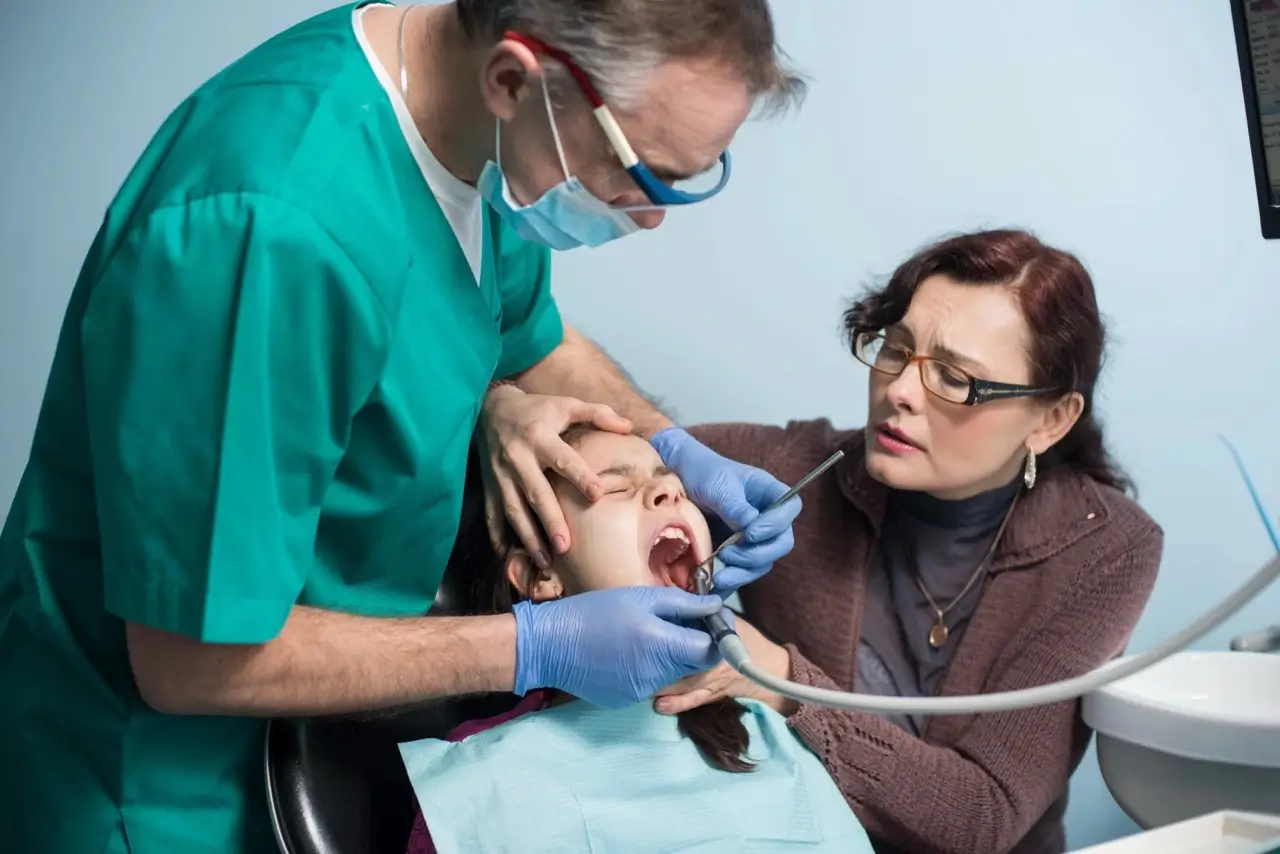
A general pediatric dentist handles most emergency dental care in the dental office. They numb the area with local anesthesia, repair the tooth, and send the child home. For cooperative older kids with minor dental anxiety, that approach works well. Nitrous oxide (also called laughing gas) or oral sedation can help children hold still through shorter dental procedures.
But not every child can sit through emergency dental work, and in those cases the dentist faces a decision: attempt the emergency procedure on an uncooperative child (which risks a poor result and can be traumatic), or refer to a sedation center where the emergency dental treatment can be completed safely under a deeper form of sedation.
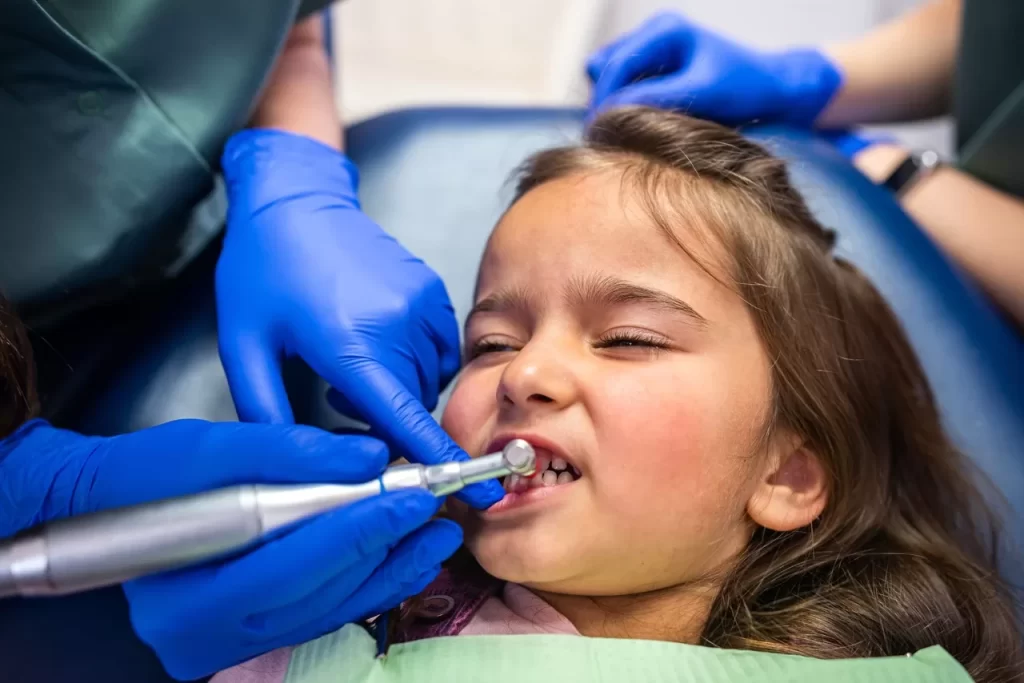
Children under three or four often cannot cooperate for emergency dental procedures. A toddler facing a dental emergency like a broken tooth with an exposed nerve does not understand why someone needs to work inside their mouth for 45 minutes. No amount of gentle coaxing changes that. This is not a medical emergency in the traditional sense, but it becomes one for the child's dental health if the needed care keeps getting delayed.
Children with significant dental anxiety or extreme dental anxiety struggle even more during emergencies. Pain, an unfamiliar dental office, and the stress of the situation all compound. When a child is already in distress, the behavioral techniques that pediatric dentists typically rely on lose their effectiveness. Sedation dentistry helps manage these situations by removing the anxiety barrier entirely.
Some dental emergencies also involve extensive treatment. A child who fell and damaged multiple teeth may need extractions, pulp therapy, and crowns in a single session. That volume of dental care takes time, and a frightened, hurting kid cannot hold still through all of it. Sedation is often the only realistic path to getting the complete dental treatment done.
Children with special needs face additional barriers. Sensory sensitivities, difficulty with communication, or certain medical conditions that affect cooperation can make in-office emergency treatment impossible regardless of the dental emergency itself.
When a pediatric dentist determines that emergency dental care cannot be completed safely in the chair, they refer the family to a sedation center. That referral is how most families find us.
How Sedation Helps During Emergency Dental Treatment
At Pediatric Sedation Center of Georgia, we provide IV sedation and general anesthesia for children who need dental treatment they cannot tolerate awake. Our approach to pediatric dental sedation puts a board-certified anesthesiologist on every case while Dr. Todd Asarch handles the dental work. Two doctors, each with one focused job.
IV sedation is the sedation method we use most often for emergency cases. With intravenous sedation, our anesthesiologist has precise control over the level of sedation throughout the dental procedure, which matters when emergency dental treatment takes longer than expected or involves more teeth than the initial exam suggested. The sedative is delivered directly through the IV, so the anesthesiologist can adjust the depth of deep sedation in real time.
For children with complex medical conditions or those whose medical history indicates a need for additional safety measures, we coordinate hospital-based sedation where additional medical resources are available. Our anesthesiologist reviews your child's complete medical history during the consultation to determine which type of sedation is safest.
Your child falls asleep, stays relaxed during dental procedures, and wakes up with their dental emergency resolved. No memory of the dental work. No new fear of the dentist layered onto an already hard day.
One of the primary benefits of sedation dentistry for emergency dental care is completeness. Instead of multiple stressful attempts at the dental office, or weeks of delayed care while a dental infection gets worse and threatens your child's oral health, sedation means one appointment with complete treatment. Sedation dentistry offers parents the assurance that every dental issue is handled in a single visit.
What Our Center Does Not Do
We are not an emergency dental clinic. We do not see walk-in patients, diagnose dental problems, or provide initial emergency evaluation. Our dental practice is focused on sedation for children who need emergency dental care with sedation that cannot be provided in a traditional dental office setting.
Your first step during a dental emergency is always your child's pediatric dentist. After hours, an emergency room can manage pain and prescribe antibiotics for active infection. The dentist evaluates the injury and determines what dental treatment the child needs.
If the dentist decides that dental sedation is necessary to complete that emergency treatment, they refer the child to our center. We schedule the sedation appointment (typically within days for urgent dental procedures) and complete all required dental work in a single visit.
This referral process exists because dental sedation requires preparation. Your child needs a medical history review, fasting instructions and a pre-sedation consultation. Even when the dental situation is urgent, skipping proper screening creates risk. Safety comes first.
First Steps When Facing a Dental Emergency
Before your child sees any dentist, these steps can improve outcomes and provide temporary pain relief.
For a knocked-out permanent tooth, pick it up by the crown (the white part, not the root), rinse gently with water, and try to place it back in the socket. If your child will not let you, store the tooth in cold milk or saline and get to a dentist within 30 minutes. Do not attempt to reimplant a baby tooth.
For a broken tooth, rinse your child's mouth with warm water, apply a cold compress to reduce swelling, and save any tooth fragments. Contact your pediatric dentist for emergency dental care right away.
For a dental abscess with facial swelling, contact your dentist or go to an emergency room. Infections in children can worsen quickly.
For bleeding from mouth injuries, apply gentle pressure with clean gauze. If bleeding does not slow within 15 minutes, head to the emergency room for urgent care.
Manage your child's pain with children's acetaminophen or ibuprofen at appropriate doses for their age and weight. Avoid aspirin in children. Your child's dentist can provide additional pain management once they evaluate the injury.
Recovery After Emergency Dental Sedation
Recovery time from sedation follows the same pattern whether the dental procedure was planned or emergency-related. Your child will be groggy and possibly emotional for two to four hours as the sedative wears off. About one in ten kids will be irritable through the evening. That is normal.
We monitor your child in our recovery area until they are stable, then wheel them to your car. Two adults are required at every sedation appointment: one to drive, one to watch the child on the ride home.
Plan for rest the remainder of the day. Soft foods when they are ready. No school, daycare, or physical activity until the next morning. Our team calls to check on your child that evening or the following day.
For complete recovery guidance, read our page on what to expect after your child's dental sedation.
Insurance for Emergency Dental Sedation
Emergency dental treatment under sedation follows the same insurance process as any scheduled sedation appointment at our center. We accept Georgia Medicaid plans (including Amerigroup, CareSource, and Peach State), PeachCare for Kids, and most PPO insurance plans.
Our team verifies your child's benefits before treatment so you know what to expect. The dental procedures themselves (extractions, crowns, pulp therapy) are typically covered under dental benefits. Sedation coverage varies by plan. For details on the plans we work with, visit our insurance page.
Common Questions About Dental Emergencies and Sedation
Can an emergency dentist put my child to sleep for treatment? Some dental offices offer sedation options like nitrous oxide (laughing gas) or oral sedation for minor emergency procedures. These types of sedation used in general dental offices provide light to moderate relaxation but may not be enough for children with extreme dental anxiety or those needing extensive emergency dental work. For children who need an emergency dental procedure under deeper sedation, IV sedation, or general anesthesia, a referral to a pediatric sedation center like ours is typical. At our center, a board-certified anesthesiologist administers and monitors the sedation for every child. Sedation can help when other approaches have failed.
How quickly can my child be seen after a dental emergency? We schedule urgent dental procedures as quickly as possible, typically within a few days of the referring dentist's call. Your child's pediatric dentist manages the immediate emergency (pain management, antibiotics for infection, stabilization of the tooth). We handle the definitive emergency dental treatment under sedation once your child is properly screened. If you need emergency dental care with sedation, our team works to accommodate urgent cases so your child gets the care you need without unnecessary delay.
Is sedation safe during emergency dental care? Sedation is safe when performed by qualified professionals with proper monitoring. Emergency dental procedures follow the same safety protocols as any scheduled sedation case at our center. Our team screens every child's medical history, follows guidelines from the American Academy of Pediatric Dentistry and the American Academy of Pediatrics, and monitors vital signs continuously throughout the dental procedure. For more on our safety protocols, visit Is Pediatric Dental Sedation Safe? For additional questions, see our pediatric sedation FAQs.
What sedation options are available for dental emergencies? The type of sedation depends on your child's age, medical conditions, dental anxiety level, and how much dental treatment is needed. Nitrous oxide and laughing gas work for mild cases in a general dentist's office. Oral sedation provides moderate sedation but is less predictable for emergency procedures. IV sedation and general anesthesia, the types of sedation used at our center, allow for deep sedation where the child sleeps completely through the dental care. Our anesthesiologist selects the sedation method based on your child's specific needs and medical history.
When to Talk to Your Dentist About Sedation
Most dental emergencies do not require sedation. Your child's pediatric dentist is the right person to decide whether in-office care at the dental office can handle the situation or whether a referral to a sedation center makes more sense.
Sedation dentistry for managing dental emergencies is most common when your child is very young, when the emergency involves multiple teeth or complex dental procedures like pulp treatment, when dental anxiety makes cooperation impossible, or when a medical condition or special need creates barriers to getting the care you need in a regular dental office.
If your child's dentist recommends sedation, call us at 470-395-2524 or contact our office to start the scheduling process. We coordinate with the referring dentist so your child gets complete emergency dental care in one safe visit at our center in Stonecrest, Georgia.
Pediatric Sedation Center of Georgia
8180 Mall Parkway, Suite 810
Stonecrest, GA 30038