Baby Root Canals Under Sedation: What Parents Need to Know

Your pediatric dentist said your child needs a baby root canal, and now you have questions. Root canals on baby teeth? The teeth that are going to fall out anyway? It sounds extreme. Many parents have the same reaction — but baby root canals are one of the most common dental procedures in pediatric dentistry, and there are good reasons your child's dentist recommended one.
At Pediatric Sedation Center of Georgia, we perform baby root canals under sedation so your child sleeps through the entire dental procedure and wakes up with no memory of it. Here's what parents need to know about why baby root canals matter, what happens during the root canal procedure, and why sedation makes a difference for your child's dental care and your child's oral health.
What Is a Baby Root Canal?
A baby root canal is a dental procedure that removes infected or damaged pulp from inside a baby tooth. The pulp is the soft tissue within the crown and root of the tooth — it contains nerves, blood vessels, and connective tissue. When tooth decay or infection reaches the pulp, the affected tooth needs root canal treatment to save it and prevent the infection from spreading to other teeth or into the jaw.
Baby root canals go by different names depending on how much pulp is affected. Understanding the difference between a pulpotomy and pulpectomy helps parents know what their child's pediatric dentist is recommending:
Pulpotomy — partial nerve treatment. A pulpotomy removes only the damaged pulp tissue within the crown portion of the tooth. The healthy pulp in the tooth's root stays intact. This procedure, also known as a pulpotomy in pediatric dentistry, is the more common form of baby root canal therapy. It's used when decay has reached the pulp but hasn't spread to the root canals yet. After the pediatric dentist removes the affected pulp and places medicated material, a dental crown is placed to protect the tooth.
Pulpectomy — complete nerve treatment. A pulpectomy removes all of the pulp from both the crown and root canals of the tooth. This is closer to what adults know as an adult root canal — a full root canal treatment that's necessary when infection has spread throughout the tooth's root system. The dentist cleans the root canals and fills them with a resorbable material that breaks down naturally as your child's baby tooth falls out on its own schedule. A dental crown is placed afterward to protect the structure of the tooth and ensure that the tooth remains functional until the permanent tooth is ready.
Both a pulpotomy or pulpectomy are considered baby root canal therapy. Your child's pediatric dentist will recommend one vs the other based on how far the tooth decay or infection has progressed and the overall health of the tooth.
Why Do Baby Teeth Need Root Canals?
"Won't the tooth just fall out anyway — why not just pull it?" Many parents ask this, and it's a fair question. Baby teeth will eventually fall out on their own schedule, but losing a baby tooth too early through extraction or untreated decay causes real dental issues in children that affect both primary and permanent teeth.
Baby teeth hold space for permanent teeth. Each baby tooth acts as a placeholder, guiding the permanent tooth underneath into the correct position. When a baby tooth is lost too early, surrounding teeth shift into the empty space. This can cause the permanent tooth to come in crooked, crowded, or blocked. Premature tooth loss often leads to orthodontic work that could have been avoided if the natural tooth had been preserved. The AAPD recommends preserving primary teeth whenever possible for this reason.
Untreated infection spreads. An infected baby tooth doesn't just hurt. The infection from damaged pulp can spread to neighboring infected teeth, into the jawbone, or to other parts of the body. Bacteria from a tooth with decay or infection can damage the developing permanent tooth underneath and threaten the health of permanent teeth. Without root canal treatment, a baby tooth can lead to an abscess, tooth loss, and damage to the adult teeth growing beneath. A baby root canal removes the infection and prevents further dental problems.
Baby teeth matter for speech and nutrition. Children need front teeth to form certain sounds and back teeth to chew food properly. Premature tooth loss from tooth decay affects both, impacting your child's development and oral health.
A baby root canal helps save the natural tooth and prevent future problems. Saving a baby tooth with root canal therapy — whether through a pulpotomy or pulpectomy — is almost always better than extracting the tooth. The tooth stays in place, holds space for permanent teeth, and functions normally until it naturally falls out. Preserving your child's teeth supports good oral health and ensures teeth come in properly when adult teeth are ready to erupt.
When Is a Baby Root Canal Necessary?
Your child may need a baby root canal when a cavity or injury damages the tooth deeply enough to reach the pulp. A root canal is necessary when tooth decay has gone beyond what a dental filling alone can fix. Signs that your child needs a baby root canal include:
- Persistent toothache or tooth sensitivity that doesn't respond to over-the-counter medication like ibuprofen (as recommended by your child's pediatrician)
- Sensitivity to hot or cold that lingers — a sign the tooth is severely damaged internally
- Swelling in the gums around the affected tooth or a visible abscess
- A pimple-like bump on the gum near the tooth, indicating infected or damaged pulp
- Darkening or discoloration of the tooth compared to neighboring teeth
- Pain when chewing or biting on the affected tooth
- Your child avoiding food on one side of their mouth
Sometimes the pediatric dentist discovers the need for a baby root canal during a routine dental exam or on a dental X-ray before your child feels pain. Dental issues in children often progress silently. Early detection during regular dental visits means catching tooth decay before it reaches the pulp — often a dental filling is all that's needed instead of root canal treatment.

What Happens During a Baby Root Canal Procedure?
Baby root canal treatment, step by step:
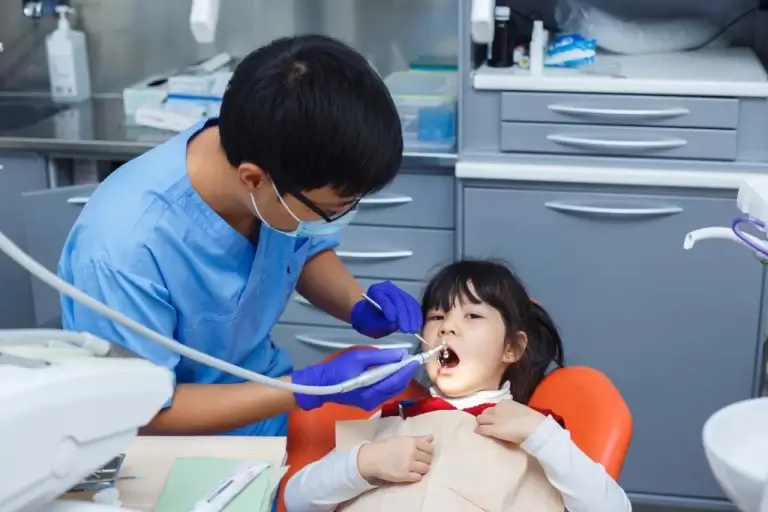
1. The tooth is numbed. Local anesthesia numbs the area around the affected tooth so your child won't feel any pain during the procedure. Under sedation, your child is already asleep.
2. The dentist accesses the pulp. The pediatric dentist makes a small opening in the tooth to reach the infected or damaged pulp inside the tooth.
3. Infected pulp is removed. For a pulpotomy, only the diseased pulp tissue within the crown is removed — the healthy root pulp stays intact. For a pulpectomy, the dentist removes all infected pulp from the crown and root canals. The inside of the tooth is cleaned and disinfected to remove the infected material and prevent further infection.
4. The tooth is filled and sealed. The empty space is filled with medicated material. In a pulpectomy, the root canals are filled with resorbable material that dissolves naturally when the baby tooth is ready to fall out, ensuring that the tooth remains healthy and the space for permanent teeth is maintained.
5. A dental crown protects the tooth. A dental crown—usually stainless steel for back teeth or tooth-colored for front teeth—covers and strengthens the tooth so it can handle normal chewing until it naturally falls out.
The entire root canal procedure typically takes about 30 to 45 minutes per tooth. If your child needs multiple teeth treated, sedation allows the pediatric dentist to perform root canals on baby teeth along with other dental treatment — additional fillings, dental crowns, or extractions — all in a single visit.
How Sedation Makes Baby Root Canals Easier
A baby root canal under local anesthesia alone requires your child to sit still with their mouth open for an extended dental procedure. For many children — especially young ones, anxious ones, or those who need extensive dental work — that's not realistic.
At Pediatric Sedation Center of Georgia, we perform baby root canals under IV sedation. Your child sleeps through the dental procedure and wakes with no memory of it. A board-certified anesthesiologist monitors your child throughout the dental treatment.
Sedation offers clear advantages for baby root canal treatment:
- No fear, no trauma. Your child won't feel any pain during the procedure. No sights, no sounds, no awareness of the dental work.
- Complete dental care in one visit. A baby root canal plus additional dental work — more fillings, dental crowns, or extractions — gets done at once. One appointment, one recovery.
- Better results from the root canal procedure. When a child is completely still, the pediatric dentist works with precision on the affected tooth without interruption.
- No negative dental memories. Your child won't remember the root canal or other dental procedures performed during the visit. This protects your child's relationship with dental care.
Not every child needs sedation for a baby root canal. Children who are older, cooperative, and only need one tooth treated often do fine at their regular pediatric dentist's office with local anesthesia and nitrous oxide. Sedation is the right option if your child is very young, has dental anxiety, has special needs, or needs treatment for multiple teeth. Whether your child undergoes root canal therapy with or without sedation, the goal is the same: save the tooth and protect your child's oral health.
Baby Root Canal vs. Extraction: Which Is Better?
When a baby tooth is severely damaged by decay or infection, the choice usually comes down to root canal therapy or extraction. A baby root canal helps save the tooth and is usually the better option for your child's oral health and the health of permanent teeth developing underneath.
When saving the tooth with a baby root canal is preferred:
- The affected tooth can be restored with a dental crown to protect it
- The permanent tooth underneath isn't close to erupting — the baby tooth needs to maintain space for permanent teeth
- The infection hasn't destroyed the tooth's root beyond what root canal treatment can repair
- Preserving the natural tooth supports proper alignment when adult teeth arrive
When extraction may be recommended instead:
- The baby tooth is close to falling out naturally — the permanent tooth is almost ready
- The tooth is severely damaged or fractured beyond what a root canal and dental crown can fix
- The decay or infection has caused significant bone loss around the tooth
- The baby tooth is blocking the permanent tooth from coming in properly
Losing a baby tooth too early can lead to spacing problems when permanent teeth come in. If extraction is necessary and the permanent tooth isn't ready, a space maintainer holds the spot. Your child's pediatric dentist will discuss whether root canal therapy or extraction may be right for your child's teeth.
Recovery After a Baby Root Canal
Recovery from a baby root canal is typically quick. How long does it take for a baby root canal to heal? The treated tooth settles within a few days. Here's what parents need to know about recovery:
The first few hours. If your child had local anesthesia only, their lip, tongue, or cheek may be numb for 2-4 hours. Watch carefully — children often bite their numb lip without realizing it. If your child had sedation, expect drowsiness for several hours. Most children feel completely normal by the next day.
Pain management. Mild soreness around the treated tooth is normal for a day or two after the dental procedure. Over-the-counter ibuprofen or acetaminophen (as directed by your child's pediatrician for their age) should manage any discomfort. Severe pain or pain that worsens after the baby root canal procedure means you should call your dentist.
Eating. Soft foods for the rest of the day. Once numbness wears off, your child can return to regular eating gradually. Avoid hard or sticky foods on the treated side for a few days to protect the new dental crown.
The dental crown. The crown placed after a baby root canal protects the treated tooth and should last until the baby tooth falls out naturally. Good oral hygiene — brushing and flossing around the crown — keeps the tooth healthy underneath and ensures that the tooth remains in good condition.
Preventing Baby Root Canals
The best baby root canal is the one your child never needs. Good oral hygiene habits reduce the risk of tooth decay reaching the pulp and help your child's teeth stay healthy:
- Brush twice a day with fluoride toothpaste — the foundation of good oral health for primary and permanent teeth
- Start flossing as soon as your child's teeth touch each other
- Limit sugary snacks and drinks that cause cavity formation and tooth decay
- Schedule routine dental checkups and dental cleanings with the pediatric dentist every six months
- Consider dental sealants on back teeth to protect against decay in the grooves
- Address small cavities early with a dental filling — treating tooth decay now prevents a root canal later
Regular dental visits catch tooth decay early, often before your child feels pain. The earlier decay is discovered, the less likely your child will need root canals on baby teeth.
Frequently Asked Questions About Baby Root Canals
Is it worth it to do a root canal on a baby tooth? Yes. A baby root canal saves the natural tooth, maintains space for the permanent tooth underneath, prevents infection from spreading, and avoids dental issues from premature tooth loss. Root canal therapy on a baby tooth is almost always better for your child's oral health than extraction.
Can a root canal be done on a 3 year old? Yes. Pediatric dentists perform root canals on baby teeth in children of all ages, including toddlers. For very young children, sedation makes the baby root canal procedure safer because the child remains completely still. At our center, a board-certified anesthesiologist monitors every child throughout.
Will my child feel any pain during a baby root canal? No. Between local anesthesia and sedation, your child won't feel pain during the procedure. Mild soreness afterward is normal and manageable with over-the-counter medication.
What happens if you don't get a baby root canal? An untreated infected tooth gets worse. The decay or infection from damaged pulp can spread to neighboring teeth, cause an abscess, damage the permanent tooth developing below, and lead to tooth loss. A baby tooth with an infected tooth left untreated leads to dental problems that are harder and more expensive to fix later.
Will my child need a dental crown after a baby root canal? Almost always. After a pulpotomy or pulpectomy, a dental crown is placed to protect the weakened tooth. The crown restores function and protects the tooth until it naturally falls out when the permanent tooth is ready to erupt.
How is a baby root canal different from an adult root canal? The concept is the same — remove infected or damaged pulp, clean the tooth, fill it, and place a crown to protect it. But baby root canal therapy uses different materials (resorbable fillers that dissolve as the tooth naturally falls out), different techniques suited to smaller teeth, and preserves the tooth only until the permanent tooth is ready. An adult root canal aims to save the tooth permanently.
Request an Appointment
If your child's pediatric dentist recommended a baby root canal and your child needs sedation to undergo the dental procedure safely, call us at 470-395-2524 to request an appointment. We'll review your child's dental needs, explain the sedation process, and answer your questions about baby root canal treatment.
For information about our sedation services, visit Pediatric Dental Sedation. To learn about preparation, see Preparing for Sedation. For answers to common questions, visit our Pediatric Sedation FAQs.
Pediatric Sedation Center of Georgia
8180 Mall Parkway, Suite 810
Stonecrest, GA 30038