How to Choose a Pediatric Sedation Dentist

When your child needs dental work done under sedation, picking the right provider feels like a big decision. It is. The dentist matters, but so does the person who keeps your child safe while they sleep. The right choice gets your child the dental care they need to protect their oral health, without turning a dental visit into something scary. Here is how to think through your sedation options and what to ask before you book.
Know the types of sedation
Not all sedation is the same. Pediatric dentists use different sedation methods depending on the child and the work that needs doing.
Lighter options come first. Many general pediatric dental offices offer nitrous oxide, often called laughing gas, or oral sedation, where a child takes a sedative medicine by mouth to relax. These are lighter levels, what dentists call minimal or moderate sedation, and they can work well for a nervous child who needs a small amount of treatment.
Deeper sedation is a different category. IV sedation and general anesthesia bring a child into deep sedation, a fully controlled sleep where they feel and remember nothing. That is what's needed for complex dental work, very young children, or kids who simply can't cooperate while awake. This level calls for more training and closer monitoring.
Pediatric Sedation Center of Georgia focuses on that deeper end. We provide IV sedation and general anesthesia, given by physician (MD) anesthesiologists, for children who need to be fully asleep to get care safely. We don't offer nitrous or oral sedation. Those lighter options belong at a general dental office. You can learn more on our pediatric dental sedation page.
Look at who gives the sedation
This is the thing most parents overlook, and it matters more than anything else. Ask who actually gives the sedation and who watches your child during the dental procedure. A qualified pediatric sedation dentist will be glad to answer that question.
At many offices, the same dentist does the dental work and runs the sedation. That means one person is splitting attention between fixing a tooth and tracking how your child is doing. At PSC, those are two different people. A physician anesthesiologist, a medical doctor trained in anesthesia, manages your child's sedation and watches only your child. The pediatric dentist, Dr. Todd Asarch, focuses only on the teeth.
Dr. Todd has practiced pediatric dentistry for more than 25 years. You can meet our anesthesia team, Dr. Campbell, Dr. Plavin, and Dr. Grandhi, on our team page.
Check training and emergency readiness
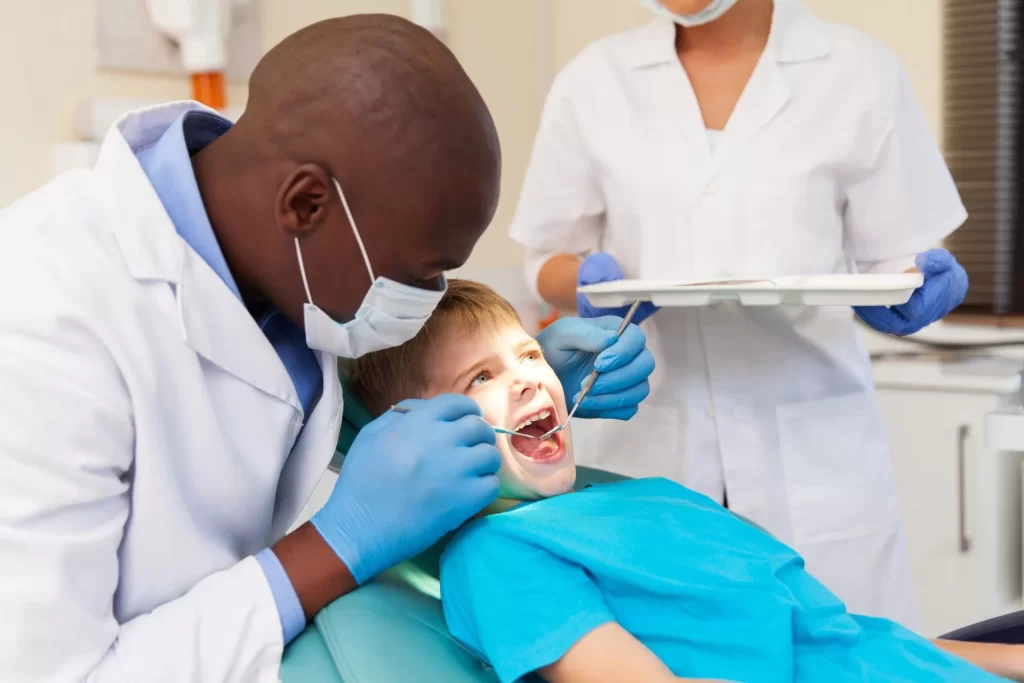
A sedation dentist should be a trained pediatric dentist, which means extra years of training after dental school focused on children. The American Academy of Pediatric Dentistry (AAPD) publishes guidelines for how children should be sedated and monitored, so it is fair to ask whether an office follows them.
Ask how the team would handle an emergency, too. A good office is ready for the rare moment when something doesn't go as planned, with trained staff and the right equipment on hand. You don't need a long technical answer. You just want to hear that they have thought it through.
Is sedation dentistry safe for children?
Sedation dentistry is used for children's dental care every day across the country. When the right professional manages it and your child is monitored closely, it is a well-established way to get your child's dental procedure done.
No one can promise zero risk, and you should be wary of anyone who does. The honest version is simple. Safety comes from proper training, a careful look at your child's medical history, and close monitoring the whole time. That is the standard worth looking for. We explain our approach on our page about whether pediatric dental sedation is safe.
Questions to ask a sedation dentist
Bring this short list to any consultation:
- Who gives the sedation, and who monitors my child during the procedure?
- Is a physician anesthesiologist or another dedicated anesthesia professional involved?
- What type of sedation do you recommend for my child, and why?
- How do you review my child's medical history first?
- How is the office prepared for an emergency?
- Can all the dental work be done in one visit?
The answers tell you a lot about how carefully an office thinks about your child.
Match the choice to your child
The right option depends on your child. Sedation dentistry for children is not one-size-fits-all. A calm older child with one cavity needs something very different from a three-year-old with lots of decay, or a child with dental anxiety who can't sit through a dental visit. The more complex the dental work, the more reason to consider deeper sedation. Think about your child's age, anxiety level, the amount of treatment needed, and any special health care needs. A good sedation dentist will weigh your child's safety and comfort with you, not push a single answer on everyone. Either way, the goal is the same, getting your child the dental treatment they need to protect their oral health.
Don't forget cost and insurance
Sedation is often billed differently than a regular visit, so ask what is covered before you commit. If your family is on Georgia Medicaid, check whether the provider accepts it, because many sedation offices don't. PSC does, and you can find details on our insurance page.
Choosing the best pediatric sedation dentist for your child really comes down to trust. You want a trained pediatric dentist, plus a dedicated physician anesthesiologist whose only job is watching your child, in a place built for exactly this kind of care. That is what we do at Pediatric Sedation Center of Georgia, the only 5-star rated sedation center in Atlanta. If you would like to talk it through, call 470-395-2524 and we'll help you find the right fit for your child.